Last week, I wrote about how Indie games are becoming too cheap and what factors we should use to price
our games in the future. This post attracted some
attention and the occasional explosions of misplaced
rage. A quick summary of the article:
- There are an increasing number of Indie game outlets where low, low prices are expected or enforced.
- Not all Indie games, for a variety of reasons, can profitably be sold for so little.
- Thus, the new markets are going to choke what Indie games can accomplish, not encourage it.
This isn't good for anyone. Developers. Customers. Distributors. Anyone.
This week, I talk about the reasons I've been given to make my games cheaper, why I ignore them, and what I think should happen now.
One Quick PointSome people on forums criticized what I wrote because they mistakenly thought I was trying to repeal the law of Supply and Demand. This is unbelievable nonsense. I LIKE the idea of pricing according to Supply and Demand. It is our outlets to the marketplace setting arbitrary price caps that is countering the good work of economics, not me.
Refuting nonsense on Internet forums is such a
Sisyphean task that I hate spending even a moment at it. But this particular misrepresentation was so common that I had to say something.
Why Do You Charge So Much? You Suck!In the last fifteen years, I have heard just about every reason why my games should be cheaper. These arguments refute infallibly the old maxim that "The customer is always right." I prefer the much more accurate "You can't win an argument with a customer." Which is why complaints about my prices tend to go unanswered. So, without further ado, here is the litany of shame ...
"Your Games Are Too Crude and Old-School To Justify the Price"Then dude, seriously, don't buy them. (And, if I may ask, why are you playing them?) I have my pride. If you don't think my games are worth it, don't give me money.
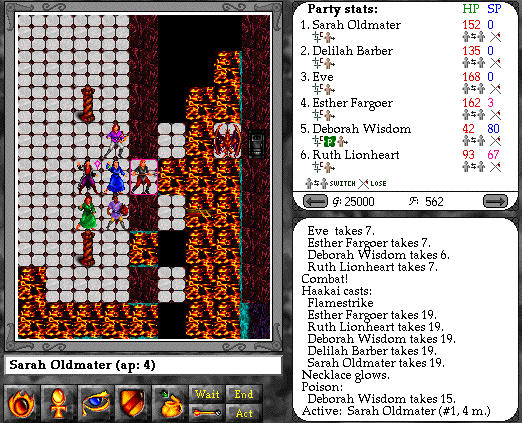
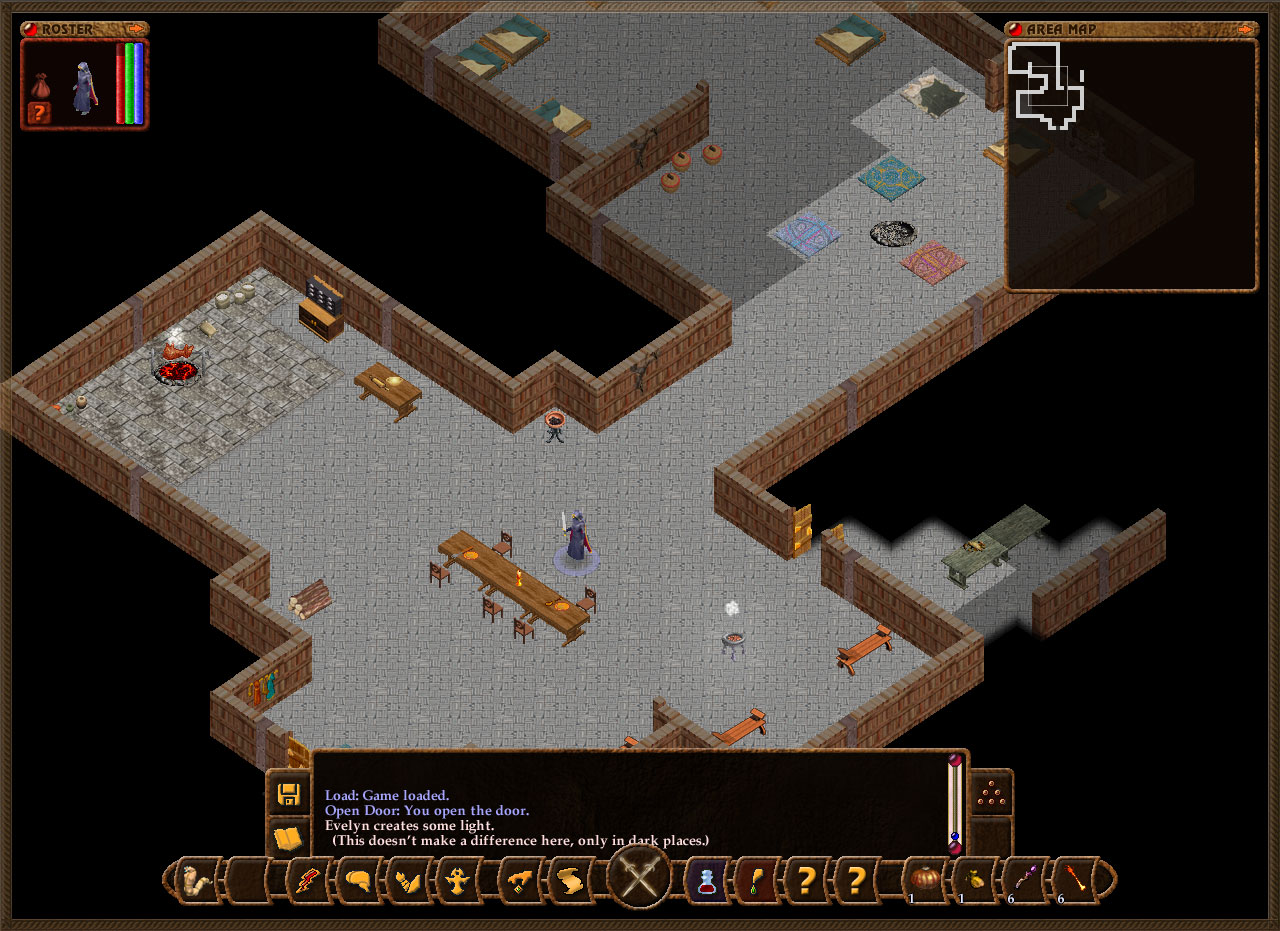
But consider this. I write plot-heavy old-school, turn-based RPGs. Almost nobody else does. I provide a quality niche service few others provide. Some people LIKE the crude, old-school thing I got going on. The scarcity of the service I provide justifies the price.
"If You Charged Less, You Would Sell More Copies"This is true. The problem is that I won't sell enough more to justify the lower prices.
Microeconomics tells us that as we charge less, we sell more, but we make less per sale. At some point, there is a best price, a point where (number of sales) * (profit per sale) is at its maximum. The question is, where is it? Based on my experiences shifting prices up and down, I think I'm actually at the sweet spot.
Suppose I charged a
World Of Goo price, like $15. This would roughly halve my profit per sale. (Because of the way credit card fees work, the less I charge per sale, the smaller percentage of profits I make.) To make up for this cut, I would have to double my sales. Double! That is a huge increase! Doubling would be big!
Based on data I've received from distributors, I believe that about 3% of my downloads turn into sales (this is called the
Conversion Rate). To make up for the price cut, I would have to increase my conversion rate to 6%. This is a HUGE rate, pretty much impossible to get for a niche product like mine. If I had a more casual-friendly product, I might manage it, but that's not my niche. I have to set a price to reflect the nature of my niche.
"Steam Cut Their Prices Way Back, and Their Sales Went Up"True. But their brief sale got a lot of
press. There is no reason to believe this would result in an increase of profits over the long run, for the reasons given above.
We have sales too. They got attention and an uptick in sales. Then that increase petered out and sales returned pretty quickly to the old levels (but with less profit per sale). If sales had stayed high, we would probably have lowered prices permanently by now, but that's not how it worked out.
"I Can Buy Better Old Games At the Game Store For Far Less"This is, honestly, a pretty hard charge to answer. When someone says, "Why should I get your game when I can get
Baldur's Gate 2 for $10?" what I think is, "Dude, you haven't played Baldur's Gate 2 yet? Go get it! It's awesome! And you know something? In a few weeks, when you're done with it, I'll still be here."
I can't compete on price with old classic. Nobody can. To expect me (or anyone) to match price with a handful of old games is completely ridiculous. Can't happen.
But my games have an advantage. They're new. Go ahead and play the old classics, or at least the ones you haven't played already. Go play
Fallout or
Planescape: Torment. They're SWEET.
You'll be done soon enough. And, when you are, I'll still be here.
"I Can Play Games Just Like Yours For Free on Kongregate Or Whatever"No. You can't. I make sure to write games that aren't already being done by everyone else. That's why I can charge so much for them. And, prospective Indie developers, if there is a similar version of the game you're writing already available for free, write a different game.
"You Don't Deserve That Much Money. Period."Then don't pay. The day nobody thinks my games are worth the price, I will fold up shop and go get a real job. But I will never, ever be shamed into charging less than what I feel is a fair price for my labor. I work hard, and I have earned a living. The service I provide to my fans is worth the ability to keep food on my family's table and a roof over their head.
If you disagree, that is your right. But I am not going to send everything I've built over a cliff to appease your wrongness.
What Should Be DoneAfter all this griping and ranting, I should offer some actual suggestions for what should happen in the future. You shouldn't complain without suggesting a better alternative, amirite?
If all of us (developers, customers, distributors) want a healthy Indie scene in which we can all make money, we should all want the people who make the content to be able to make a living. If you agree, there are things each of us can do to help this happen.
Customers - Don't pirate Indie games. Sure, it's wrong to pirate any game, but not all crimes are equal. But when the game is the direct source of the cash that puts food on a family's table, that is an extra-intense level of Bad.
Anyone who would
deny the two guys who made World of Goo their lousy fifteen bucks deserves a good, sharp kick.
Developers - Figure out the right price for your game and stick with it. Don't let anyone shame you into going lower. It stings to pass on distribution on Amazon, sure. But if you can't get the price you need to charge, swallow hard and move on. Maybe if they aren't able to sell more of the titles they want to sell, they will change to a wiser path.
Distributors - Don't set arbitrary price ceilings (like at Amazon or
XBox Live Community Games). If you are setting the price yourselves, use the developers price as a guide. Then let the magic of the marketplace do its work, punishing the foolish and rewarding the smart. If a game is too expensive, the price can be lowered later. But if your overly low prices don't support the people who make the products that make you money, well, that is not in your simple, dollars-and-sense best interest. Don't cut the developer off at the knees before his or her product even reaches the market.
None of this is unreasonable. I'm not being all idealistic or hippy-dippy. I'm just using hard, simple business sense. This accelerating rush to give our products away is simple craziness.
So go ahead. Try it. Charge what you're worth. See what happens. You might as well. Because we'll all have to do it sooner or later. You might as well do it while you're still in business.