The other day, after Avadon: The Black Fortress came out, a certain community of hardcore fantasy RPG fans jumped on it with universal loathing.
I thought that I had a lot of good points to be made about the perils and opportunities of listening to feedback from fans (or ex-fans), so I wrote a blog post about it. This had the entirely predictable effect of infuriating the previously mentioned community.
Now, in the light of day, I feel kind of bad about it. I think what I wrote was fairly mild and I do still stand by every word of it. However, I think I kicked a group of my fellow gamers when they were down, and, being a lifelong gamer myself, I regret that. I've been reading their posts and chatting with them and I think I understand where they're coming from a lot better now.
I am only bringing this up because this blog is mainly about indie gaming, and I think this a great opportunity to make a huge point in that area.
Here's Your Audience, Wrapped Up In a Bow
Fledgling developers write me all the time asking for advice on what sort of game to write. What I tell them is that they should look for an underserved niche and serve it. This is the Great Magic Power of Indie developers.
Here, as I see it, is the story of RPG Codex. These people love, love, love old-school hardcore RPGs. The sort that used to be common on the ground and have faded away. They were forsaken by Sir-Tech, and Origin, and SSI, and Bioware, and now me. There was a thing that they loved, and it is gone, and they are angry about it. The anger might manifest itself in unappealing ways, but it's real. Nobody likes losing what they love.
You want to do what I do? You want to make a living writing RPGs? You have skillz? Go there. Talk to them. Pick past the ranting, find the reasonable things they are after, and write that game. Do it well, and you can make money.
And One Final Word For RPG Codex
I am still a gamer at heart. The gritty, hardcore elements in Avadon are later in the game. I put them there to not scare off more casual gamers. Teh casualz need to be eased into that sort of thing.
Were you my fan, but the Avadon demo turned you off? Well, here's a challenge. We have a one year no questions asked money-back guarantee. Buy the game. Give it a few hours on Hard or Torment difficulty. (I suggest until the boss fight with Zhossa Mindtaker.)
Still disappointed? Then I don't want your money. You get it back. My lips to God's ear.
Showing posts with label teh casualz. Show all posts
Showing posts with label teh casualz. Show all posts
Friday, May 6, 2011

Thursday, February 10, 2011
Three Rules For Difficulty In RPGs

As I put the final touches on Avadon: The Black Fortress, I am finally wrapping up the most touchy, painful, contentious part of the game: play balance. Should it be harder or easier? Is this particular fight fair? How many players will wash out halfway through the game and be forever angry at me for my suckitude?
The fans of role-playing games are a pretty diverse bunch. Some prefer stories. Some fixate on stat-building. Some want to beat everything easily, and others are irritated if there are no challenges. It's a pretty amorphous blob of interests, and nobody can satisfy them all. I just try to appeal to as much of the blob as possible.
Over the years, I have made three observations regarding game difficulty. These are the ideas I always come back to as I decide how tough a given section or encounter will be. I think these guidelines are, to the extent anything can be in a creative endeavor, The Truth.
Observation One: There are two sorts of fights in an RPG: Fights that are supposed to be easy and fights that are supposed to provide a challenge.
In other words, first, there are fights that will almost never ever kill a player, also known as trash, or trash mobs. If your trash mobs are frequently killing the character, your balance is messed up. (Early versions of Avernum 6 had a big problem with this.) Most of the time, the vast majority of the fights in a game will be this sort.
Then there are fights that the player can possibly lose (mini bosses, bosses). And, of course, for fights that can kill the player, there is a spectrum of how likely that end result is. Some bosses will only kill you if you really aren't paying attention. Others require actual skill and strategy, and maybe a few tries to get your tactics down.
Observation Two: In an RPG, you have to have some of both sorts of fight.
RPG fans expect a lot of trash to slaughter, so they can be a badass and Conan-like and so they can collect experience to get strong and get new spells and swords and stuff.
The trickier part is understanding the need for tough fights. Very often, players don't like to be seriously challenged. They hate to lose. They hate to lose repeatedly. Sometimes, the temptation to just give up and have every fight on the default difficulty be easy peasy is overwhelming.
But you still need to have tough fights, for several reasons. A game full of only easy fights against trash is monotonous and dull. The suspension of disbelief in a role-playing game is delicate, and, if a dragon is only as tough as Goblin #0145, it just feels wrong. And because the adrenaline rush of achieving something difficult (be it slaying a demon lord of winning a game of solitaire) is one of the great pleasures of computer games, and you just can't lose that.
So, you might ask, why don't I just put in tough fights and really carefully balance them so that everyone can beat them in just a few tries? That brings us to the third observation, which is both subtle and vitally important.
Observation Three: If a fight has any chance of beating the player, there is a percentage of users who will NEVER be able to beat it.
It took me a long, long time to realize this. Too long. But it is vitally important to understand the difficulty of doing game balance.
Everyone has bad days. Everyone has blind spots. Some people who reach your tough fight will have used up all their healing potions, or refuse to use the healing potions, or forget that they have healing potions, or never have realized that healing potions are potions you can drink that heal you. Because of this, whenever people reach a tough fight, there will be a few of them who just can't beat it. They just can't. You can adjust the percentage of people who lose, but it will never be zero.
(By the way, along these lines, if you put any puzzle or riddle in a game, there is a percentage of users who will never figure it out. This is why I've drastically reduced the number of puzzles in my games. Arguably, I have reduced it too much. It bears thinking about. However, this is my rationale for doing it.)
When someone loses to a fight more than three or four times, they will almost always be angry, and they will always blame you. Some of them will temporarily lower the difficulty, get past the fight, and move on. Some will gut it out and prevail. And some will ragequit and you will never sell a game to them again.
I try to appeal to a wide group of customers, but there is one customer I can never appeal to: The gamer who can't beat a fight and refuses to lower the difficulty. I get e-mails from this person all the time, expressions of hurt and betrayal and rage, accompanied with the promise that they will never buy another one of my games. A promise I believe, by the way. I hate getting these e-mails. Everyone does. It's like a punch in the stomach. But I suck it up, send a nice message back, and move on. It's like death and taxes. It's part of the biz.
But, with every difficult encounter, I eventually have to plant my flag and say, "You must be at least this badass to go on this ride." If you aren't sure why I do this, please consult with the reasons accompanying Observation Two.
Of Course, These Aren't Universal Laws
I expect that the standard swarms of hair-trigger internet nitpickers haven't read this far. They went to the Comments to excoriate me based on some minor point about Observations One or Two, or they want me to explain how Shadow of the Colossus can be a good game with only boss fights. (Answer: Not an RPG.)
But role-playing games are a genre. Genres have conventions. That's what makes them Genres! I can go along with the conventions or fight against them, but, either way, they are part of the DNA of the games I make.
Role-playing games need trash and they need bosses. Put both in, and never lose sight of what makes trash trash and what makes bosses bosses.
Wednesday, April 7, 2010
The Great Scrabble Controversy of 2010!
So yesterday the Internetz reported that, in some places, the rules of Scrabble would change to allow proper nouns. Gaming geeks like myself were completely outraged. Many flecks of spittle hit many monitors. Then the dust cleared and it began to appear that we had all been played in a careful bit of PR. Which is all to the good.
But why would it be such a terrible, terrible thing to allow proper nouns in Scrabble? It's a nice exercise in Game Design 101, methinks. Try answering the question for yourself. Go on. I'll wait. I'm sitting right here, chin in my hand, listening to the White Stripes and waiting for you.
OK. Got your answer? Well, here's mine.
One. In games, the ability to determine whether a move is legal or not is kind of a good thing.
When you play Scrabble, you first point at your dictionary and say, "That is the dictionary" and then you had a foolproof way to settle any argument about whether your awesome play of "quitzwij" gets 80 points or not. Sure, your dictionary might suck and not always approve of words you are SURE are correct, but at least you have a final arbiter.
But what if proper nouns are allowed? Well, there is no single authoritative dictionary of proper nouns, and there never will be. Thus, there is, like, no hard and fast way to determine what you are ever allowed to do in the game. This isn't a way to get people to play a game. It's a way to get people to argue.
Sure, each individual house could then come up with a stack of books and have them be the source of all legal proper nouns. An Atlas. An encyclopedia. An almanac. But there are several problems with this. First, that's offloading a lot of design work on the players, which is lazy and sucks. Just saying, "Grab a dictionary" is infinitely more reasonable. And, second, it makes validating a move far more time-consuming. Looking something up in the dictionary? Fast. Looking up one name in in eight books, less so.
Two. There are too many proper nouns, so there are too many legal plays. Just about any short combination of letters with a vowel or two is a name for something SOMEWHERE.
Here's an exercise. Go to Google and just generate a short random word with a vowel or two. Search for that random word and see what you get. For example, I literally slapped the keyboard to generate "Jihnu". I searched for it, and found several people with that name.
Amazing! Before, J, I, H, N, and U would have required thought to play. But the magical alchemy of this rule change have transformed those letters into 15 points of gold! And I didn't even have to, like, know anything.
Having a puzzle where every answer is correct takes a bit of the fun out of doing puzzles.
Three. It completely changes the nature of the game. Maybe you like the newer game, maybe not. But it worked extremely well for decades as a game of strategy and grammar, and objecting to completely reworking it is entirely understandable. At this point, you can accuse me of hating change. Well, once a game has reached a certain status and omnipresence, it shouldn't be changed unless the change is a clear, unarguable, huge improvement. Want a game where you get points for thinking up city names or whatever? Good for you. Invent it.
But, as I said, it looks like this is just a big misunderstanding and a PR bonanza for the Scrabble people. Which is good, because now we can focus on rules to classic games that should be changed.
My favorite? The Income Tax space in Monopoly. That's the one where you pay $200 or 10% of the value of all your holdings. Which means that the space invites you to grind the game entirely to a halt while you haul out an adding machine and add and subtract and carry the two and figure out exactly how much money your position is worth. Who still thinks that adds to the fun?
But my favorite part about the Income Tax space? The rules specifically say that you aren't allowed to figure out how much 10% is before you decide to pay $200 or 10%. Here's a game design tip I'll give you for FREE. If a design element requires you to place rules on what a player is allowed to think, you might want to reconsider it.
But why would it be such a terrible, terrible thing to allow proper nouns in Scrabble? It's a nice exercise in Game Design 101, methinks. Try answering the question for yourself. Go on. I'll wait. I'm sitting right here, chin in my hand, listening to the White Stripes and waiting for you.
OK. Got your answer? Well, here's mine.
One. In games, the ability to determine whether a move is legal or not is kind of a good thing.
When you play Scrabble, you first point at your dictionary and say, "That is the dictionary" and then you had a foolproof way to settle any argument about whether your awesome play of "quitzwij" gets 80 points or not. Sure, your dictionary might suck and not always approve of words you are SURE are correct, but at least you have a final arbiter.
But what if proper nouns are allowed? Well, there is no single authoritative dictionary of proper nouns, and there never will be. Thus, there is, like, no hard and fast way to determine what you are ever allowed to do in the game. This isn't a way to get people to play a game. It's a way to get people to argue.
Sure, each individual house could then come up with a stack of books and have them be the source of all legal proper nouns. An Atlas. An encyclopedia. An almanac. But there are several problems with this. First, that's offloading a lot of design work on the players, which is lazy and sucks. Just saying, "Grab a dictionary" is infinitely more reasonable. And, second, it makes validating a move far more time-consuming. Looking something up in the dictionary? Fast. Looking up one name in in eight books, less so.
Two. There are too many proper nouns, so there are too many legal plays. Just about any short combination of letters with a vowel or two is a name for something SOMEWHERE.
Here's an exercise. Go to Google and just generate a short random word with a vowel or two. Search for that random word and see what you get. For example, I literally slapped the keyboard to generate "Jihnu". I searched for it, and found several people with that name.
Amazing! Before, J, I, H, N, and U would have required thought to play. But the magical alchemy of this rule change have transformed those letters into 15 points of gold! And I didn't even have to, like, know anything.
Having a puzzle where every answer is correct takes a bit of the fun out of doing puzzles.
Three. It completely changes the nature of the game. Maybe you like the newer game, maybe not. But it worked extremely well for decades as a game of strategy and grammar, and objecting to completely reworking it is entirely understandable. At this point, you can accuse me of hating change. Well, once a game has reached a certain status and omnipresence, it shouldn't be changed unless the change is a clear, unarguable, huge improvement. Want a game where you get points for thinking up city names or whatever? Good for you. Invent it.
But, as I said, it looks like this is just a big misunderstanding and a PR bonanza for the Scrabble people. Which is good, because now we can focus on rules to classic games that should be changed.
My favorite? The Income Tax space in Monopoly. That's the one where you pay $200 or 10% of the value of all your holdings. Which means that the space invites you to grind the game entirely to a halt while you haul out an adding machine and add and subtract and carry the two and figure out exactly how much money your position is worth. Who still thinks that adds to the fun?
But my favorite part about the Income Tax space? The rules specifically say that you aren't allowed to figure out how much 10% is before you decide to pay $200 or 10%. Here's a game design tip I'll give you for FREE. If a design element requires you to place rules on what a player is allowed to think, you might want to reconsider it.
Thursday, November 19, 2009
Make Your Game Easy. Then Make It Easier.
I started writing my first RPG for Spiderweb Software in 1994. Yes, this makes me old. When I started my cute, little shareware business, I had a lot of instincts for how to write a good role-playing game. Happily, about 85% of those instincts were good ones, so I was able to write solid games and make a living.
But 15% of my original instincts were not good. In fact, they were terrible, and it has taken many years for me to realize that. Even now, I have to fight those bad instincts with all of my heart, and I lose as often as I win.
My worst instinct has to do with game difficulty. I'm a hardcore nerd of the old school, and I'm not truly satisfied unless a game is really difficult. Other people, also known as "regular humans," do not, in fact, want this.
I used to succinctly describe my views about game difficulty thus:
People will forgive a game for being too hard. They will never forgive it for being too easy.
No. This is, in fact, completely, 100% opposite from the truth. A better summary of reality would be:
People will happily forgive a game for being too easy, because it makes them feel badass. If a game is too hard, they will get angry, ragequit, hold a grudge, and never buy your games again.
Video games are leisure time expressions of adolescent power fantasies. They should only be hard if players specifically request that they be hard.
I tend to like hard games. I am perfectly happy if any given title has 3 or 4 fights that requires 3 or 4 tries each to beat. But I am increasingly recognizing that this makes me a bit of a mutant. I am also realizing that while I like (or at least don't mind) the occasional repeated failure, I don't require it. I blasted through Brutal Legend with ease and I still had a great time. Plants vs. Zombies is easy, and it is also terrific. On the other hand, a game like Ninja Gaiden 2, which would happily make me refight bosses ten times on the easiest difficulty level ... Well, that was just stupid. Never again.
After long reflection, here is my new rule for RPGs I write:
When a player is on the default difficult level, has built his or her characters poorly, and is playing straight through the main storyline with mediocre tactics, that player should almost never be killed.
I can almost hear the heads of hardcore gamers imploding with impotent nerdrage. But seriously. If you have a problem with this, I think you're getting a lot of your fun from making other people have less fun.
Of course, a game should have harder difficulty levels. And, if a player chooses to opt-in on higher difficulty, they should be seriously nasty. But, when played on the default difficulty, the game should be accessible to your mom or average eight-year old.
I'm about to release my next game, Avernum 6. And it doesn't live up to what I have learned. In fact, in parts, it gets downright tricky. But then I'm going to write an all-new game series, and I promise that it will be pretty easy on Normal difficulty.
And if you turn the difficulty up to Torment, well, I'll be gunning for you.
Oh, and one parting thought.
If your game is actually fun, killing the player won't make it more fun. But nothing sucks all of the fun out of a good game faster than repeated failure.
But 15% of my original instincts were not good. In fact, they were terrible, and it has taken many years for me to realize that. Even now, I have to fight those bad instincts with all of my heart, and I lose as often as I win.
My worst instinct has to do with game difficulty. I'm a hardcore nerd of the old school, and I'm not truly satisfied unless a game is really difficult. Other people, also known as "regular humans," do not, in fact, want this.
I used to succinctly describe my views about game difficulty thus:
People will forgive a game for being too hard. They will never forgive it for being too easy.
No. This is, in fact, completely, 100% opposite from the truth. A better summary of reality would be:
People will happily forgive a game for being too easy, because it makes them feel badass. If a game is too hard, they will get angry, ragequit, hold a grudge, and never buy your games again.
Video games are leisure time expressions of adolescent power fantasies. They should only be hard if players specifically request that they be hard.
I tend to like hard games. I am perfectly happy if any given title has 3 or 4 fights that requires 3 or 4 tries each to beat. But I am increasingly recognizing that this makes me a bit of a mutant. I am also realizing that while I like (or at least don't mind) the occasional repeated failure, I don't require it. I blasted through Brutal Legend with ease and I still had a great time. Plants vs. Zombies is easy, and it is also terrific. On the other hand, a game like Ninja Gaiden 2, which would happily make me refight bosses ten times on the easiest difficulty level ... Well, that was just stupid. Never again.
After long reflection, here is my new rule for RPGs I write:
When a player is on the default difficult level, has built his or her characters poorly, and is playing straight through the main storyline with mediocre tactics, that player should almost never be killed.
I can almost hear the heads of hardcore gamers imploding with impotent nerdrage. But seriously. If you have a problem with this, I think you're getting a lot of your fun from making other people have less fun.
Of course, a game should have harder difficulty levels. And, if a player chooses to opt-in on higher difficulty, they should be seriously nasty. But, when played on the default difficulty, the game should be accessible to your mom or average eight-year old.
I'm about to release my next game, Avernum 6. And it doesn't live up to what I have learned. In fact, in parts, it gets downright tricky. But then I'm going to write an all-new game series, and I promise that it will be pretty easy on Normal difficulty.
And if you turn the difficulty up to Torment, well, I'll be gunning for you.
Oh, and one parting thought.
If your game is actually fun, killing the player won't make it more fun. But nothing sucks all of the fun out of a good game faster than repeated failure.
Thursday, June 18, 2009
Indie games: Still Too Cheap. Getting Cheaper.
I wrote a couple of articles not long ago about how the expected price for Indie games is becoming really cheap. Too cheap to support a thriving, innovative Indie scene. I thought that pricing all games below 10 bucks on Amazon and XNA Community games, sets a dangerous standard and steals the freedom to influence prices that developers need. I got a reasonable amount of abuse for this, because, of course, people hate being told that the things they want are unsustainable.
Which brings us to the new development at Big Fish Games, one of the larger casual games portals ...

Their current pricing scheme, as I understand it, is that you can get any of their games for $6.99. This subscribes you to their service, which charges you that amount per month and gives you another game in return. Of course, you can pay the $6.99, get the game, and immediately unsubscribe from the service, which is what I suspect a number of people do.
So I decided to poke around for a bit and find out how standard this sort of pricing is. At Yahoo games ...
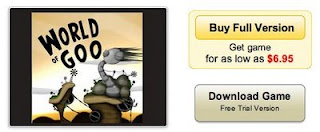
... and MSN games ...

... and GameHouse ...

and so on. $6.95 is currently the magic price. Generally, to get that price, you need to buy a subscription. In other words, use the developer's game as a loss leader to win their private route into your credit card.
So let's run some numbers. A typical deal on these portals is that the portal keeps, say, 10% of a sale for expenses and then pays a 40% royalty. (This is pretty close to what I generally get.) Which means each sale of a game on Big Fish would earn you roughly $2.50. You better hope you're earning more per copy elsewhere because otherwise, if you want a pretty meager payout for your work (say, $100K before expenses), you have to sell forty thousand games. You know how hard it is to move that many copies? PRETTY DARN HARD.
Now, this is the point where generally some Internet knucklehead says, "Well, they have the right to do whatever they want." Yeah, of course. And I have the right to point out the gruesome consequences of their exercising that right.
To have a chance of not getting murdered at those prices, you need to sell a monster pile of copies. This is exactly the situation that punishes serving niche markets, taking risks, and doing new things. And those are exactly the roles people are supposedly looking to Indie developers to fill.
I have been arguing that these low prices will result in a desolate and uncreative Indie games space. Look at the offerings at the casual portals, and I think you'll see that I have a point. PopCap provides some cool, innovative games (they're basically the Pixar/Blizzard of casual games), but otherwise the casual portals are a dry expanse of Bejewled/Zuma variants, simple puzzle games, and milking of established properties. Much like in Hollywood, the need to get a blockbuster to survive delivers a harsh blow to creativity.
Of course, it's easy to say, "But they're casual game fans. They don't want anything challenging. Scrabble and hidden object games are the limit for such simple creatures." I personally think that this is nonsense. But the way we're going, we'll never find out.
So What To Do About It?
First, support and encourage portals that don't force developers to sell their work for a pittance. Like Steam, Greenhouse, and MacGameStore.
Second, if you are writing a game of your own, don't let anyone steamroll you into giving your work away. If a portal is going to sell your work for $6.95, make sure you've written a game that can compete in that market. If not, at the very least, don't give them your newest freshest stuff. I'll let them sell an older game for that price for the advertising and exposure, but only after I've already made good money off of it.
What I care about is having a marketplace where a wide variety of Indies can write a wide variety of games and make a living. The casual portals have their place, but, if you aren't prepared for how little they're going to pay you, they're a trap.
Which brings us to the new development at Big Fish Games, one of the larger casual games portals ...

Their current pricing scheme, as I understand it, is that you can get any of their games for $6.99. This subscribes you to their service, which charges you that amount per month and gives you another game in return. Of course, you can pay the $6.99, get the game, and immediately unsubscribe from the service, which is what I suspect a number of people do.
So I decided to poke around for a bit and find out how standard this sort of pricing is. At Yahoo games ...

... and MSN games ...

... and GameHouse ...

and so on. $6.95 is currently the magic price. Generally, to get that price, you need to buy a subscription. In other words, use the developer's game as a loss leader to win their private route into your credit card.
So let's run some numbers. A typical deal on these portals is that the portal keeps, say, 10% of a sale for expenses and then pays a 40% royalty. (This is pretty close to what I generally get.) Which means each sale of a game on Big Fish would earn you roughly $2.50. You better hope you're earning more per copy elsewhere because otherwise, if you want a pretty meager payout for your work (say, $100K before expenses), you have to sell forty thousand games. You know how hard it is to move that many copies? PRETTY DARN HARD.
Now, this is the point where generally some Internet knucklehead says, "Well, they have the right to do whatever they want." Yeah, of course. And I have the right to point out the gruesome consequences of their exercising that right.
To have a chance of not getting murdered at those prices, you need to sell a monster pile of copies. This is exactly the situation that punishes serving niche markets, taking risks, and doing new things. And those are exactly the roles people are supposedly looking to Indie developers to fill.
I have been arguing that these low prices will result in a desolate and uncreative Indie games space. Look at the offerings at the casual portals, and I think you'll see that I have a point. PopCap provides some cool, innovative games (they're basically the Pixar/Blizzard of casual games), but otherwise the casual portals are a dry expanse of Bejewled/Zuma variants, simple puzzle games, and milking of established properties. Much like in Hollywood, the need to get a blockbuster to survive delivers a harsh blow to creativity.
Of course, it's easy to say, "But they're casual game fans. They don't want anything challenging. Scrabble and hidden object games are the limit for such simple creatures." I personally think that this is nonsense. But the way we're going, we'll never find out.
So What To Do About It?
First, support and encourage portals that don't force developers to sell their work for a pittance. Like Steam, Greenhouse, and MacGameStore.
Second, if you are writing a game of your own, don't let anyone steamroll you into giving your work away. If a portal is going to sell your work for $6.95, make sure you've written a game that can compete in that market. If not, at the very least, don't give them your newest freshest stuff. I'll let them sell an older game for that price for the advertising and exposure, but only after I've already made good money off of it.
What I care about is having a marketplace where a wide variety of Indies can write a wide variety of games and make a living. The casual portals have their place, but, if you aren't prepared for how little they're going to pay you, they're a trap.
Edit: I should have also mentioned Reflexive games, who are also being admirable in pricing Indies at a level where they can actually make money.
Subscribe to:
Posts (Atom)